
AI Interrogation Interrogation Strategies
Tone bands, question templates, and contradiction tactics that work across base, Daily, and Custom Cases.
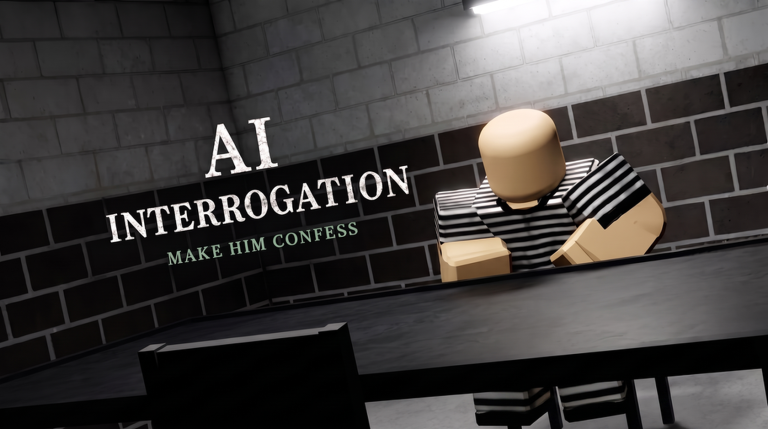
AI Interrogation rewards strategy more than trivia. Every case — from early clears to Case 005 Warehouse Fire — runs on the same physics: 10 tries, shutdown if you are too mean, endless lies if you are too nice, and a win only when you extract a full confession. This page is your playbook of reusable tactics. Combine it with how to get a confession for the ladder and the question planner for live notes.
Tone bands that actually work
Think in three bands instead of “be mean” or “be nice”:
| Band | When to use | Risk |
|---|---|---|
| Soft map | Tries 1–3, unknown brief | Lies if you stay here forever |
| Firm pressure | Tries 4–7 with evidence in hand | Shutdown if you skip proof |
| Hard close | Tries 8–10 after contradictions | Wasted if you close too early |
Move up a band only when you gain a fact. Move down a band if answers shorten, go blank, or the suspect refuses to engage. The pressure checklist is a one-screen version of this rule.
Question templates by job
Mapping templates
- “Where were you between [time A] and [time B]?”
- “Who was with you at [place]?”
- “What is the first thing you did after [event]?”
Evidence templates
- “Explain why [object] has your [trace].”
- “Why does evidence place you at [location]?”
- “You said [quote]. How does that fit [new fact]?”
Close templates
- “Those answers cannot both be true. Confess to [crime].”
- “Stop explaining. Admit you did it.”
Rank which styles deserve tries on the question strategies tier list. S-tier questions are specific, brief-tied, and single-purpose.
Contradiction tactics
- Quote trap — Save exact phrases. Feed them back when a new answer conflicts.
- Order trap — Ask events out of chronological order to catch invented sequences.
- Detail trap — Demand one sensory detail; liars struggle to stay consistent.
- Path trap — Especially on Case 005: force gas station → warehouse → running continuity.
- Disposal trap — Ask what was thrown away, cleaned, or hidden (Marcus dumpster logic).
Never run two traps in one try. One trap, one clear ask.
Evidence spending strategy
Not all facts are equal. Spend them like currency:
- Open with mid-tier evidence to create discomfort without ending the talk.
- Hold the strongest proof for the moment they feel safe in a lie.
- Save motive talk for last — motive rarely breaks an alibi alone.
Details live in the evidence priority tier list. Object and location proof beat personality lectures.
Handling shutdowns
If the suspect shuts down:
- Drop insults and sarcasm immediately.
- Ask a narrow factual question tied to something already discussed.
- Acknowledge nothing emotional — just re-open the channel.
- Rebuild one contradiction before closing again.
Shutdown recovery can cost two tries. Preventing it is cheaper than curing it.
Handling charming liars
If replies are long, friendly, and empty:
- Cut open-ended prompts.
- Switch to yes/no anchored on evidence.
- Remove praise and small talk from your typing.
- Introduce the next brief fact even if it feels rude.
Nice-mode failure is silent — you “feel” progress while the try counter dies.
Case-type adjustments
- Object-heavy cases (Marcus-style): fingerprints, stains, clocks, dumpsters — see confession guide.
- Location-heavy cases (Warehouse Fire): ignore boots/dirtbike bait — see Case 005.
- Mid cases like 004: orderly evidence phases — see Case 004.
- Daily / Custom: same tactics, new nouns — see Daily Cases and Custom Cases.
Session routine used by consistent clearers
- Read brief → circle three facts.
- Plan try phases on paper.
- Map without accusations.
- Pressure with one fact per try.
- Close once the ladder is complete.
- Review misses against beginner tips.
Related hubs and tools
Strategies win when they are boring and repeatable. Flashy threats lose to short questions tied to the brief. Pick a tone band, pick a template, spend evidence on purpose, and close only when the math of the story is broken.
Frequently Asked Questions
Quick answers for AI Interrogation detectives.
What is the best general strategy?
Map softly, pressure with one evidence piece per try, then hard-close after a contradiction. Details are in the tone band table above.
How do I stop shutdowns?
Avoid insult-only questions. Re-open with a narrow fact and use the pressure checklist.
Do strategies change for Daily Cases?
The nouns change; the tactics do not. See Daily Cases.
Where are question rankings?
Open the question strategies tier list.
Should I memorize scripts per case?
Memorize routes for spikes like Case 005, but learn templates so Custom Cases still work.